
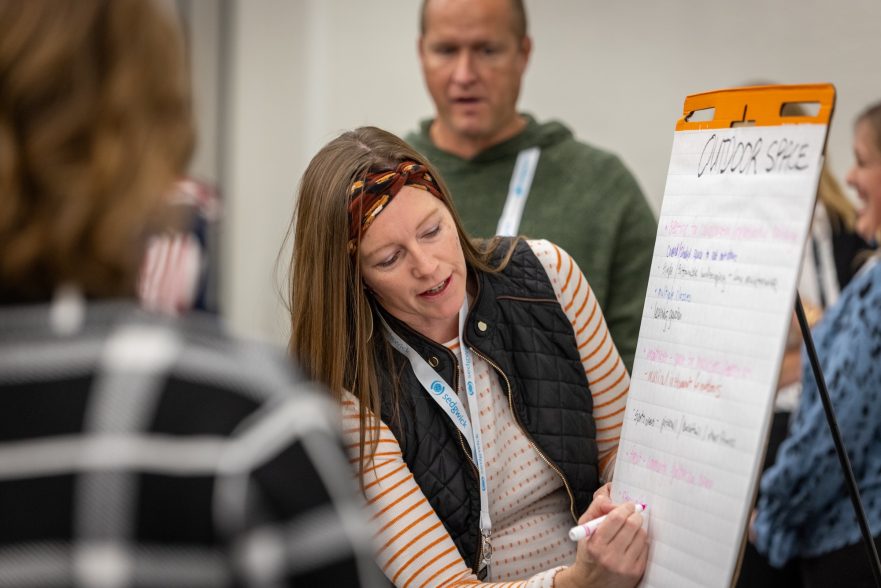
K-12 education leaders from across the state attended the 2025 Ohio School Boards Association Capital Conference in November to explore how they can strengthen student engagement and well-being. Over two days, Garmann Miller partnered with Shelby City Schools, Nationwide Children’s Hospital, and Fairborn City Schools to present sessions focused on supporting the whole child and designing meaningful learning environments.
Prioritizing Wellness with School-based Health Centers
The first session, led by Superintendent Michael Browing from Shelby City Schools; Nationwide Children’s Dr. Mary Kay Irwin and Bridget Cook; and GM principal Brian Wolf, focused on the impact of school-based health centers. The team shared how Shelby’s on-campus center improves access to primary care for students, families, and staff, reducing barriers that often delay essential medical attention.
“The school-based health center gives Shelby students access to care right where they learn,” Wolf said. “Partnering with Nationwide Children’s Hospital brings trusted, high-quality services to campus and makes the school a true hub for wellness and community support.”
Speakers highlighted outcomes such as reduced absenteeism, fewer disciplinary referrals, improved health outcomes, and a strengthened community perception of school quality and safety.
 Michael Browning (left), Dr. Mary Kay Irwin
Engaging Staff & Students in Learning Environment Design
The second session brought together GM’s Becky Baumer, ALEP; architect Mandy Niekamp, AIA; Fairborn Middle School Principal Stephanie Reynolds; and instructor Brandi Keeton to show how empowering staff and students can transform the design process.
The presenters showcased Fairborn’s sixth grade design challenge, a project-based learning experience where students envisioned spaces for their new middle school. Their ideas, ranging from flexible classrooms to outdoor learning, directly informed the design and highlighted the value of authentic student and staff voice.
They also shared GM’s Educational Visioning process, which helps districts align physical spaces with curriculum goals and future-ready learning practices. Attendees wrapped up the session with a hands-on “ideal classroom” small-group activity that encouraged reflection on how the environment shapes instruction.
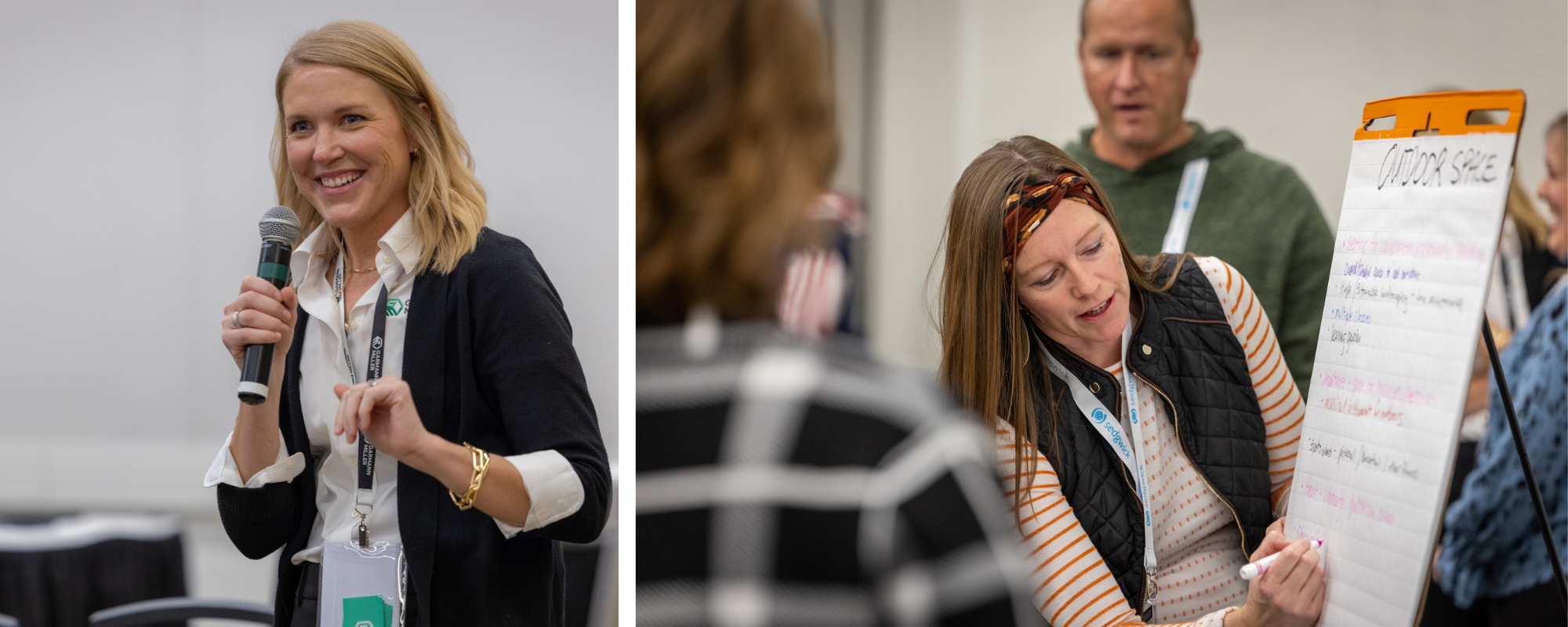 Becky Baumer, ALEP (left), Participants in group breakout session
“My favorite part of our OSBA learning session was the rich small-group breakout discussions, where participants shared ideas ranging from highly creative to very pragmatic. Comparing those insights with the input from Fairborn students and staff reinforced how valuable diverse perspectives are in shaping thoughtful learning environment designs,” said Baumer.
Both sessions reinforced a central theme: when districts engage their communities—whether through student-driven design or accessible school-based healthcare—schools become stronger, healthier, and more supportive places for students to learn and grow.