

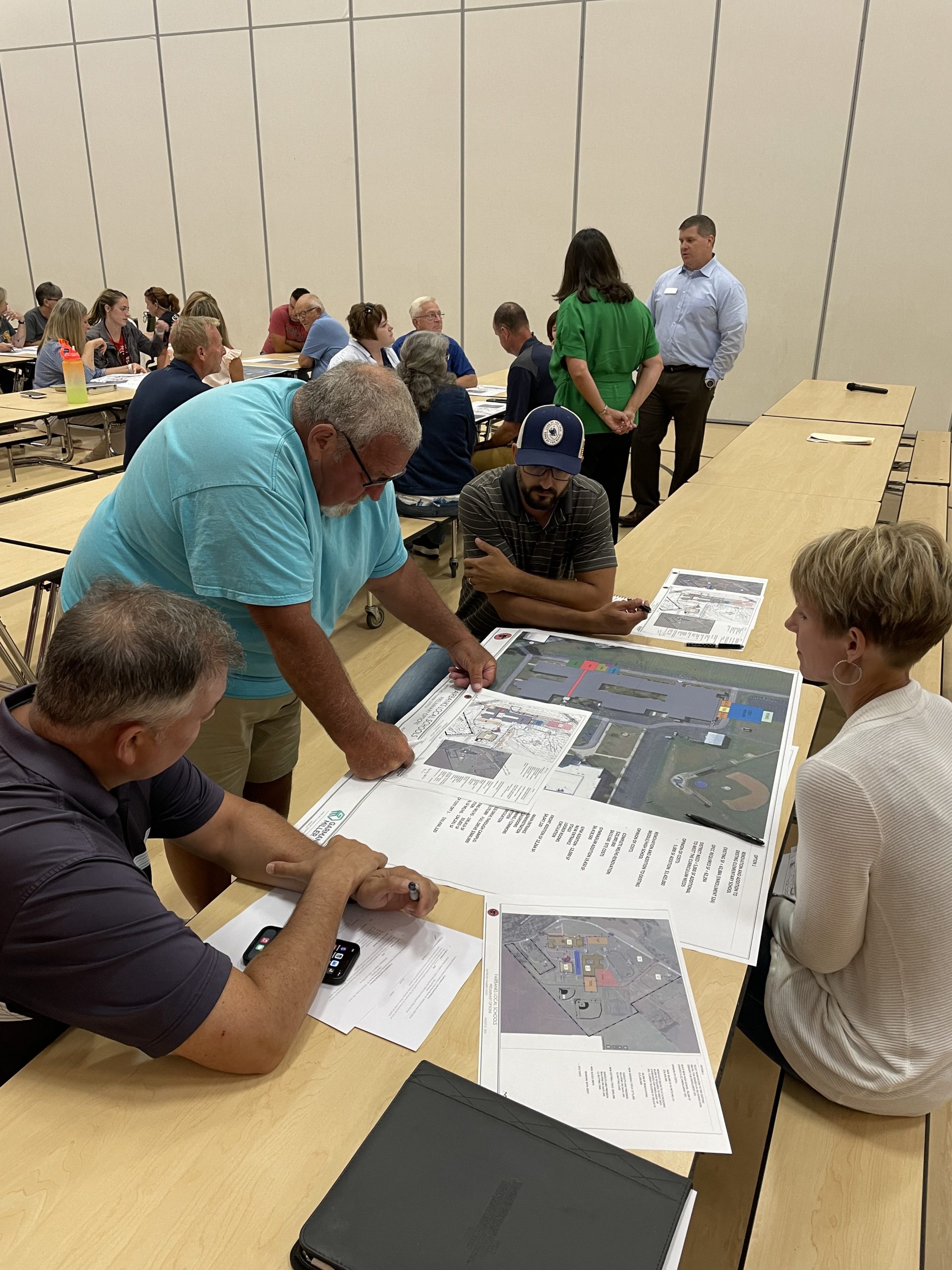
 Building a community-driven master facility planning process that instills trust, creates buy-in and welcomes all voices was the focus of Garmann Miller’s educational session at the 2023 Ohio School Boards Association Capital Conference, Nov. 13. With a spotlight on Fairbanks Local School District in Milford Center, Ohio—a small, agricultural town with around 5,000 residents and 1,120 students—the discussion revolved around challenges such as aging infrastructure, consensus-building and funding hurdles.
The panel was led by Fairbanks Superintendent Adham Schirg and included Eric Baltzell, CEO, principal in charge; Monica Bruaw, lead K-12 planner, and Brian Wolf, project manager, from Garmann Miller who shed light on the pivotal concept of community-driven master facility planning.
Since December of 2021, a volunteer Facilities Task Force met with the purpose of developing a master facility plan for Fairbanks Local Schools. This 54-person group consisted of board of education members, parents, students, residents, alumni, business professionals and school staff. The district hosted task force and community meetings in alternate months to keep everyone informed and engaged.
“Fairbanks Local Schools values the input and support of community stakeholders, in particular when making decisions that have long-term impacts across the school district,” Schirg said. “A community-driven model was used for the development of plans like the mission, vision and strategic planning. A similar model was used for [our] facilities.”
Fairbanks’ Strategic Goal: The 3 Cs in Action
Addressing these challenges head-on, Fairbanks centered its approach on capital improvements, capacity enhancement and curriculum development. The district embraced an open, community-driven process, involving stakeholders at every level without predetermined outcomes. It adopted a comprehensive communication strategy employing surveys, social media, videos, and local house calls to ensure continuous engagement and involvement of the wider public in the planning stages.
GM’s Framework: Guiding Collaborative Planning
Critical to planning success was the implementation of Garmann Miller’s 3D process: Define, Discover and Develop. This methodology facilitated extensive dialogue, established priorities, assessed existing conditions, and created multiple site options. Through educational visioning encompassing curriculum, social-emotional development and safety considerations, the district effectively engaged staff, administration and the community in co-defining the future of education.
Small-group Dynamics: Engaging Community Voices
Encouraging small-group breakouts to gather feedback and foster buy-in, Fairbanks presented three options based on community input, leading to a final consensus-driven decision. This process highlighted the critical role of transparent community engagement, diverse task forces and myriad communication strategies for an educational institution striving to be resilient, persistent and committed to building a shared future.
Reflecting on this session, it’s evident that cultivating community-centric planning requires continual commitment and engagement. By fostering an environment that values collective input, encourages diverse participation, and upholds transparent processes, K-12 schools can pave the way for a future that truly reflects the needs and aspirations of their communities.
“It is exciting to see the work we are doing together to build a shared future for Fairbanks,” Schirg said.
