
K-12 leaders teamed up with Garmann Miller for an insightful panel discussion at the Ohio School Boards Association Capital Conference in November 2024. Titled “Creating Innovation Hubs: The Impact of STEM Spaces in K-12 Education,” the session explored how modern environments focused on science, technology, engineering, and math have transformed today’s learning experience for students. Experts shared success stories, innovative strategies, and the tangible benefits of these dynamic spaces.
Monica Bruaw, CPSM, a K-12 planner with Garmann Miller, moderated the session, and she was joined by superintendents Dr. Martin Miller (Antwerp Local Schools), Mel Rentschler (Allen East Schools), and Jason Schrader (New Bremen Local Schools), along with Becky Baumer, ALEP, an interior designer with GM. Together, they shared real-world examples of student achievement through STEM tools and curriculum.
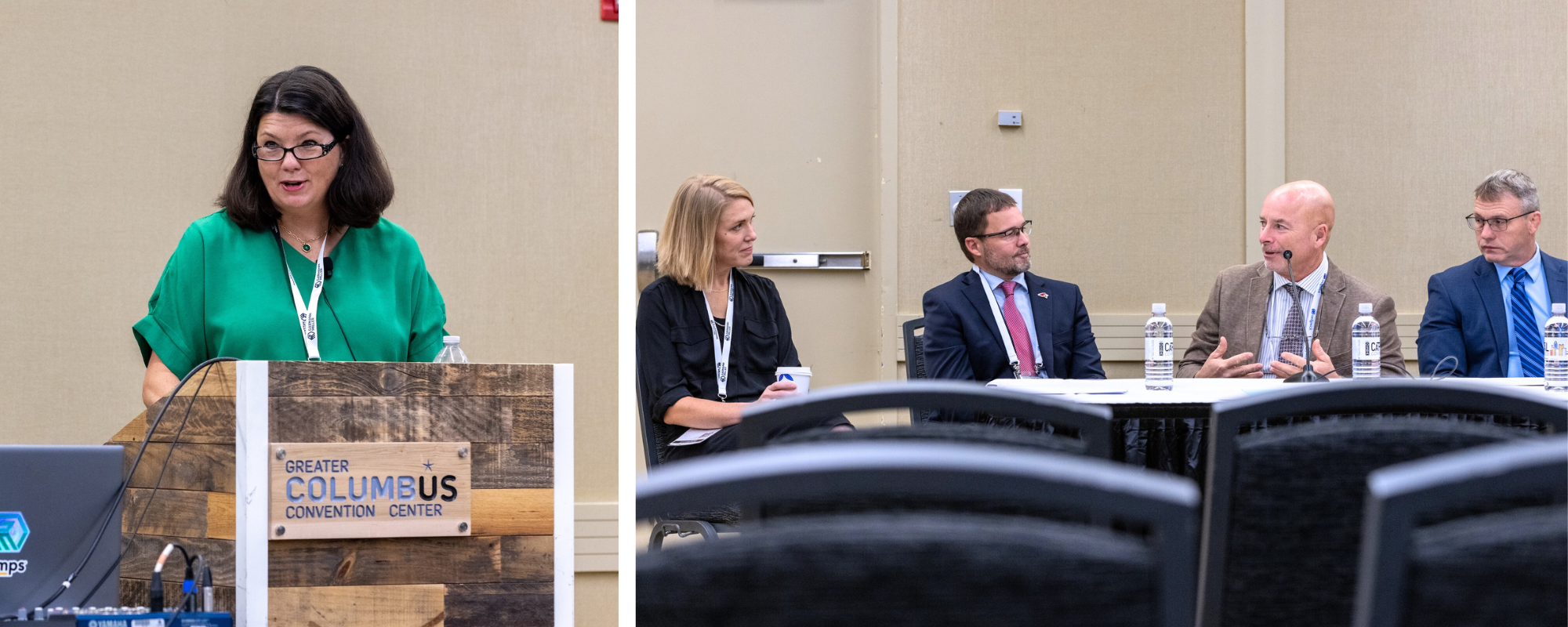
Left to Right: Monica Bruaw, Becky Baumer, Jason Schrader, Dr. Martin Miller, Mel Rentschler
Rentschler gave an inside look at Allen East’s journey. Six years ago, the district converted a home economics room into a small STEM lab to launch the program, making creative use of shared spaces. Fast forward five years, and STEM had become one of the most in-demand courses for students in grades 4-12. “Our STEM program gives many kids a reason to come to school and succeed,” he said. “It’s not just theory; they get to imagine and actually build.”
As STEM education soared in popularity, Rentschler knew it was time to think bigger. The district launched a $5.8 million capital improvement plan to bring its vision to life, resulting in a 17,000-square-foot addition. The expansion added six classrooms, a dedicated study room, middle school office space, a teacher’s lounge, a conference room, a social worker’s office, and three STEM labs.
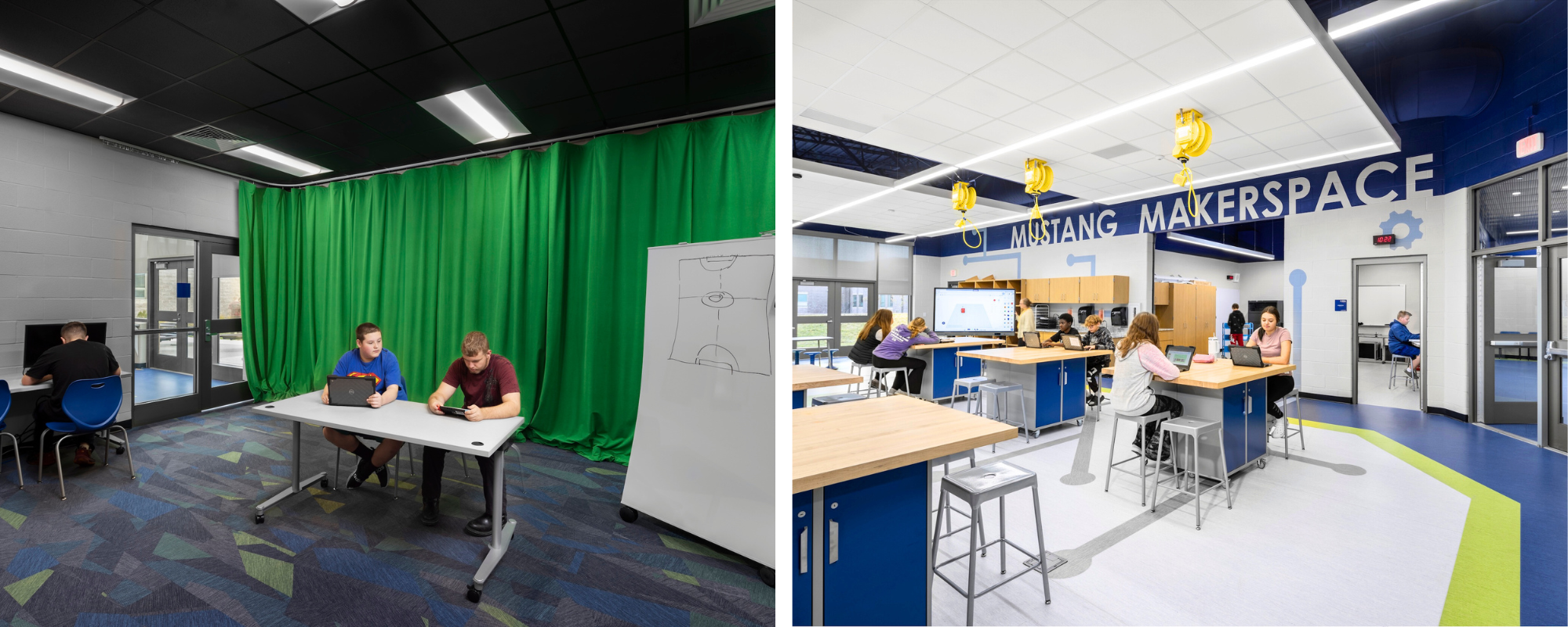
The labs included a makerspace, a high-tech robotics lab, and a greenroom complete with a dedicated area for the school’s e-sports team. Due to the generosity of corporate sponsors and grant funding, these labs are equipped with the latest technology, empowering students to push the boundaries of creativity and problem-solving.
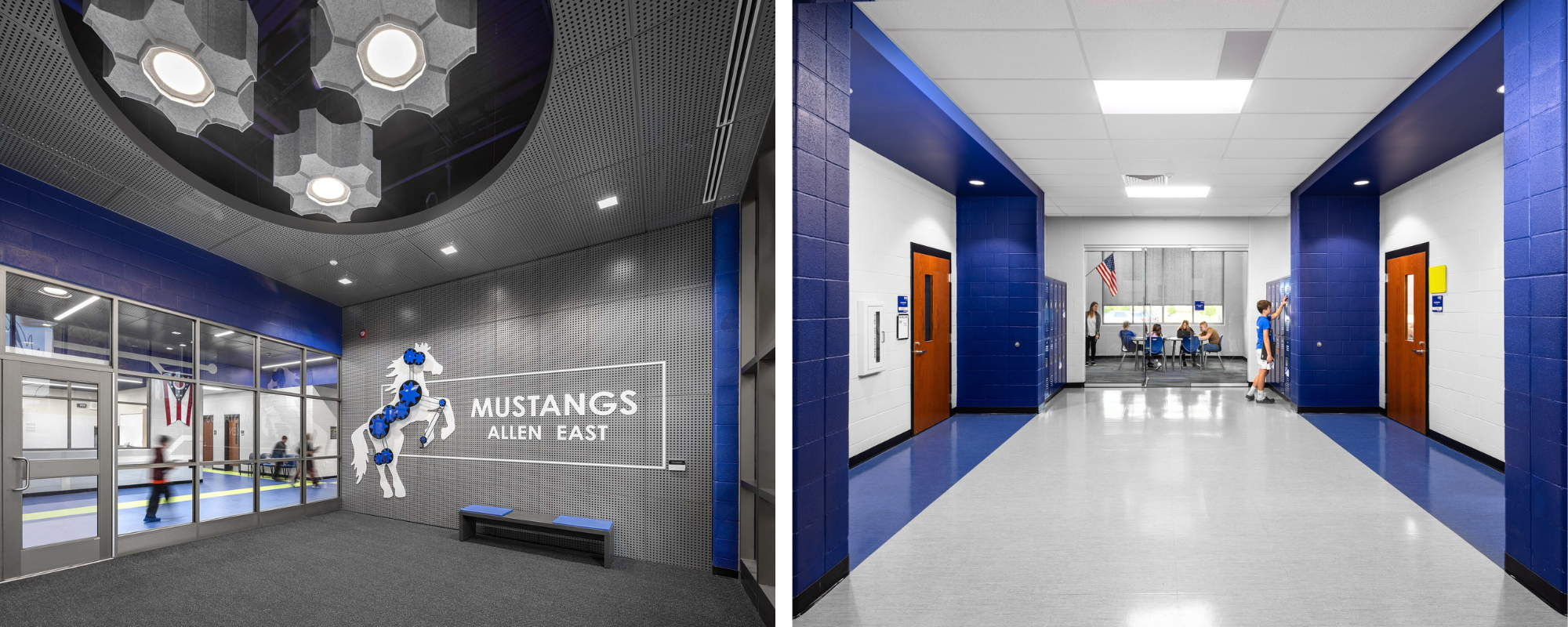
This project has fostered strong community partnerships with organizations and local leaders committed to making a difference. Partners such as Honda, Rhodes State Community College, and Apollo Career Center have enriched the program by sharing their expertise and advanced manufacturing capabilities, which are not yet available within the school. With support from Honda engineers, an after-school robotics club was launched and now competes at regional, state, and national events.
But how do you measure the success and effectiveness of a project like this? Rentschler stated, “When you walk into the lab, you see kids thinking abstractly, collaborating, and building. They are truly using skills that are needed to make them successful at whatever they decide to pursue in the future. The state and national awards are great, but the daily work is the true sign of the success of the program.”
The innovations of Allen East, New Bremen and Antwerp highlight the power of integrating a STEM program to drive student achievement. Thanks to a collaborative effort of the school and community, young learners gain the opportunity to explore their STEM futures, while unlocking new avenues for growth.