
Communicating the need for school facility improvements can be just as important as planning and designing the spaces themselves. How can school leaders help their communities understand the challenges, opportunities, and long-term value behind a major investment?
That was the focus of a presentation at the 2026 ISBA/IAPSS Fall Conference Monday, Oct. 5, 2026, in Indianapolis. Garmann Miller’s Eric Baltzell, CEO; and Derek Luth, Fort Wayne office co-director; joined Steve Teders, superintendent of DeKalb County Central United Schools; and Valerie Armstrong, board president, to present “Seeing is Believing: Using Visual Storytelling to Build Support for School Facilities.”
Using DeKalb Central’s ongoing campus improvements as a case study, the presenters explored how thoughtful planning, transparent communication, and compelling visuals can help school districts build understanding and trust throughout the facility planning process.
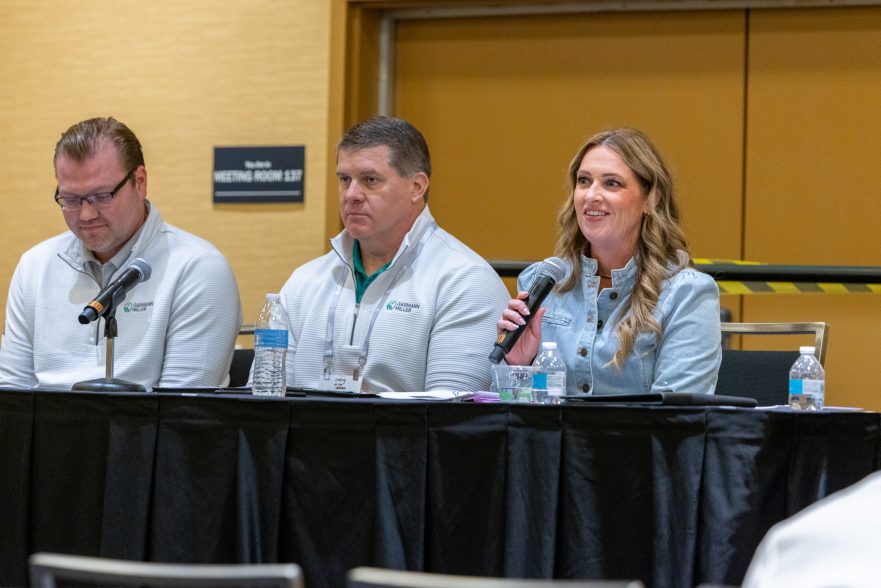
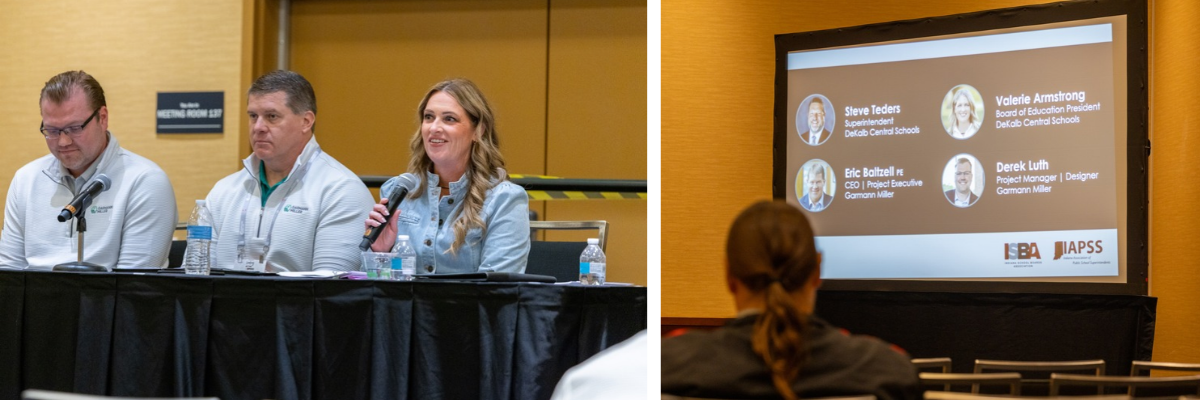 From left: Derek Luth, Eric Baltzell, Valerie Armstrong
Building understanding through communication
The session highlighted the importance of engaging stakeholders early, aligning district leadership, and clearly communicating the needs driving a facility project.
DeKalb Central’s journey included navigating an unsuccessful referendum, completing improvements in phases, and continuing conversations with the community about future facility needs. These experiences helped shape the district’s approach to its next major investment: the Baron Activity Center and Performing Arts Center project.
The project includes more than 56,000 sq. ft. of new and renovated space, creating additional opportunities for performing arts, student activities, athletics, and community use.
Baltzell shared how GM’s 3D planning process—Define, Discover, Develop—helps school districts establish priorities, gather stakeholder input, and evaluate solutions while building a foundation for effective communication.
“Successful facility planning starts with listening,” Baltzell said. “When school leaders engage their communities early, establish clear priorities, and communicate the reasons behind their decisions, they build a foundation of trust that carries through the entire process.”
The presenters also emphasized the importance of preparing school boards and administrators to communicate consistently, answer difficult questions, and explain how facility investments align with educational goals and responsible financial stewardship.
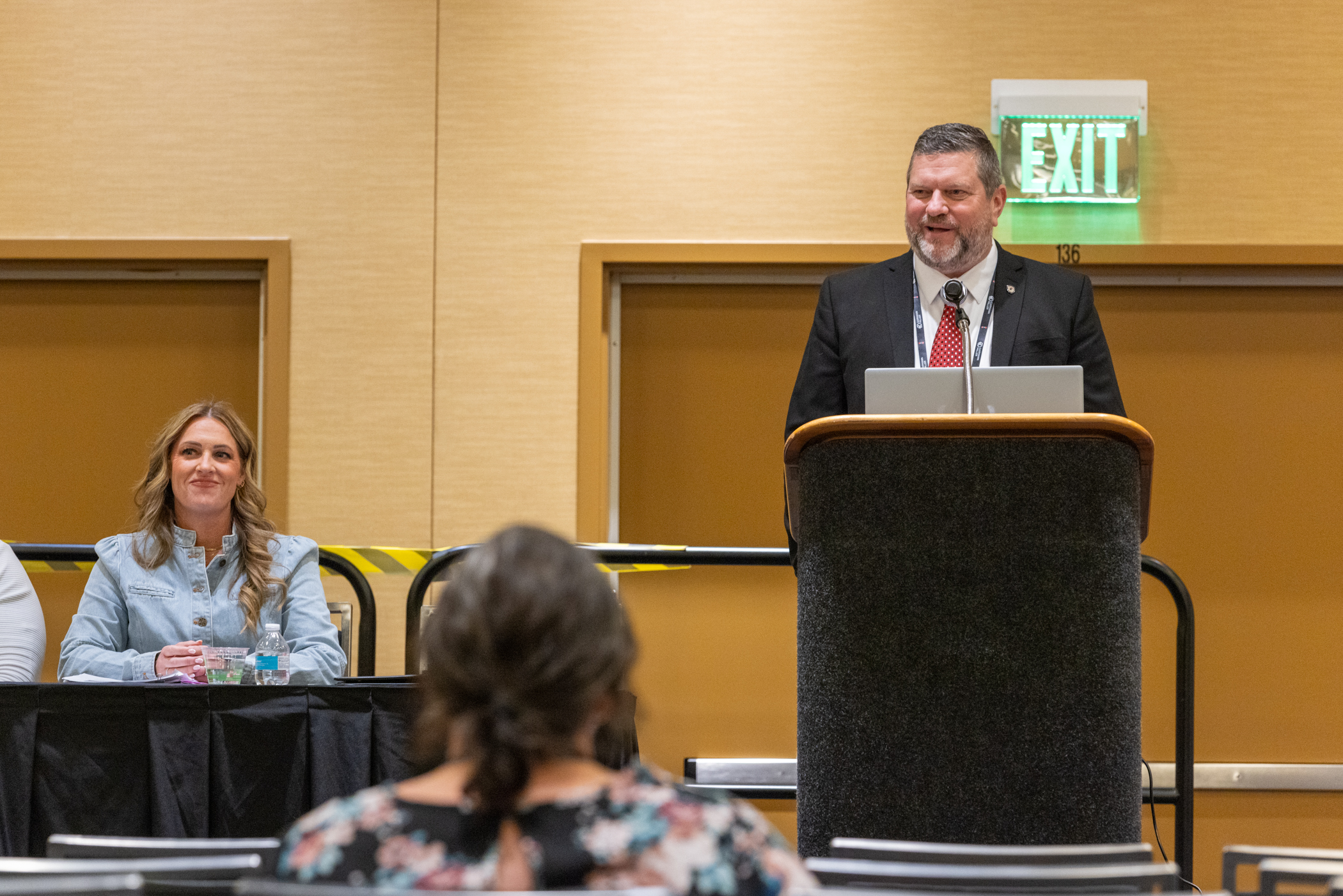 From left: Valerie Armstrong, Steve Teders
Making the vision visible
Visual storytelling can help bridge the gap between the technical details of a facility project and the community’s understanding of its purpose.
Luth demonstrated how existing-condition photography, site plans, architectural renderings, animations, and promotional materials can help school leaders communicate both current challenges and proposed solutions.
Using DeKalb Central’s project as an example, the session illustrated how these tools can make complex information more accessible. Photographs help explain existing facility limitations, while renderings and animations allow stakeholders to envision how new and renovated spaces will function.
“It’s one thing to explain why a facility needs improvement. It’s another to help people see it,” Luth said. “Visual storytelling connects today’s challenges with tomorrow’s possibilities, helping communities better understand what an investment can mean for students.”
The discussion reinforced that effective visuals do more than showcase a design. They help tell a complete story, connecting the need for improvements to the experiences and opportunities those spaces will provide for students.
Creating trust through transparency
Beyond drawings and renderings, the presenters emphasized that successful facility communication requires consistency, transparency, and meaningful community engagement.
By sharing progress, explaining financial considerations, and connecting improvements to the district’s broader educational mission, school leaders can help stakeholders better understand the decisions behind a project.
The key takeaway was that building community understanding doesn’t begin with a finished design. It starts with listening, establishing a clear vision, and helping people see how thoughtful facility investments can positively impact students and their communities for years to come.